Going into the New Year (2024), I have been looking back on what I created and enjoyed creating in 2023. At the end of this post, you can find a gallery of drawings which I currently plan to use as flags and signposts, to keep me on track, but also push me further.
Looking back at some sketches I made and ideas I had, I’m convinced again, that I want to attempt a few (colourful) illustrations from imagination, based on scenes/pictures that have popped into my head. This is a challenging activity and exhausting, but I eventually enjoy the results tremendously.
Last year, I identified two major influences I want to focus on: the artist Sempe (or Franco-Belgian comic illustrators in general) and the German expressionists from the beginning of the 20th century.
Do not do: still life is boring for me, and I will continue to avoid it. And I will not drink and draw.
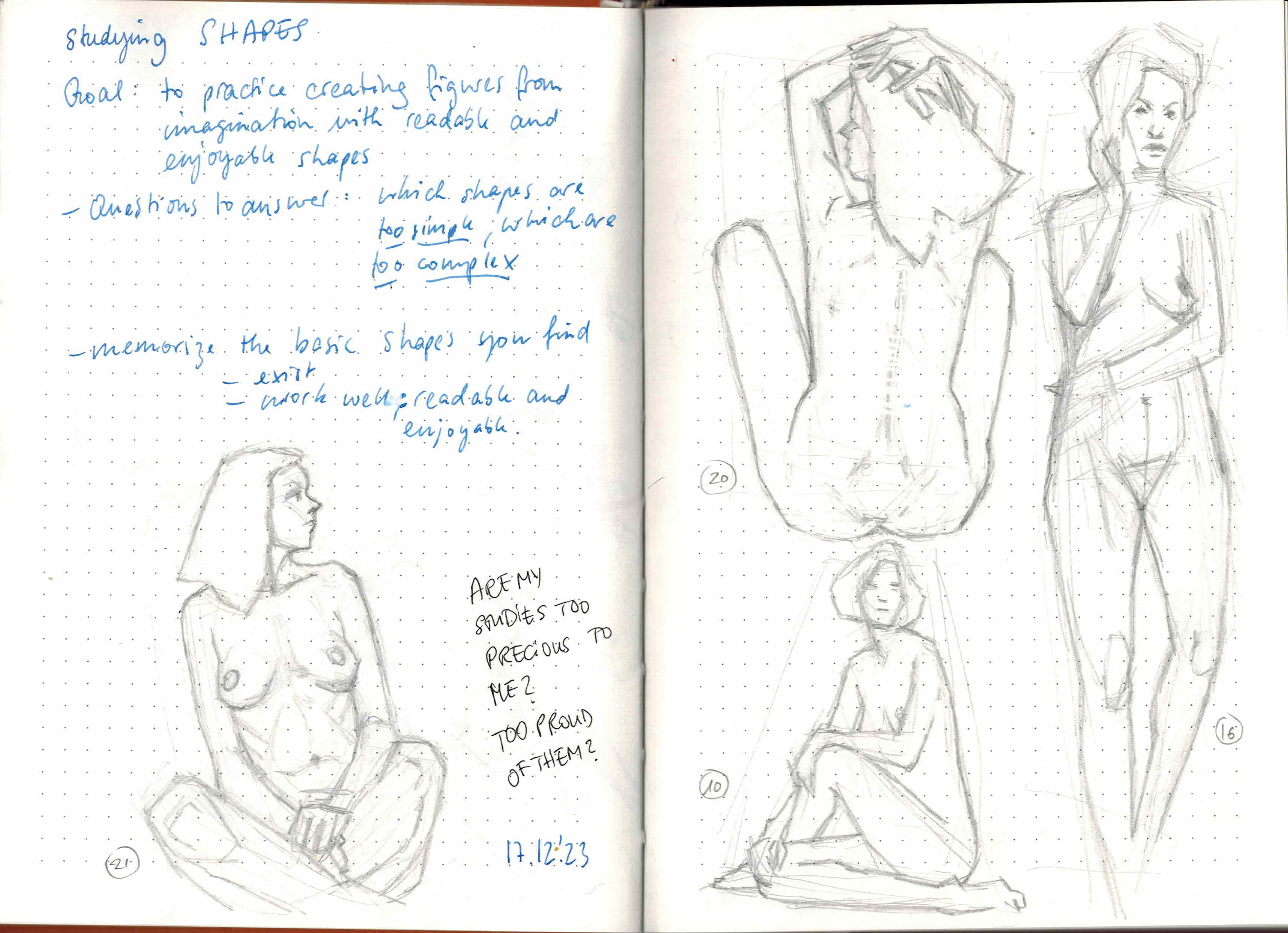
Study: shapes and especially sub-shapes (which I haven’t completely unlocked the mystery of yet) shall be on the top of my list.
I will enjoy the act of drawing.
Tools to use: always use tools I enjoy using, which is a black, waterproof felt-tip pen, but also watercolour with a waterbrush. Colourful brush pens are nearly as exciting. Colour pencils are still valid for a portrait or for brushing over the dry, rough surface of a finished water colour drawing. Pencils are a good start for a drawing or when in study mode.
Fountain pens are good for writing, I should not waste my time and energy drawing with them, unless absolutely necessary (e.g. nothing else available).
Don’t hesitate to return to an older drawing, they are not finished until I say so. Add more colour, more contrast, clean it up. Study what I like and what I don’t like about them.
Use early morning gesture drawing or quick sketching to challenge yourself:
– look at the reference photo for a few seconds (shapes, rhythms, idea/story)
– look at something else (book, “stuff”, anything but the reference)
– draw a quick sketch (in pencil and pen), not a copy, the drawing should be based on the idea/story
– repeat 5 or 6 times
– return to the references and without copying address any issues (spend as much time as feels comfortable to you)
Urban sketching, i.e. sketching in public:
– go to places that interest me (places you have a connection)
– sit on benches, curbs, walls, steps (have your inflatable cushion with you)
– draw people, draw their hands, draw people interacting
– do not think you have to sit in cafes all the time
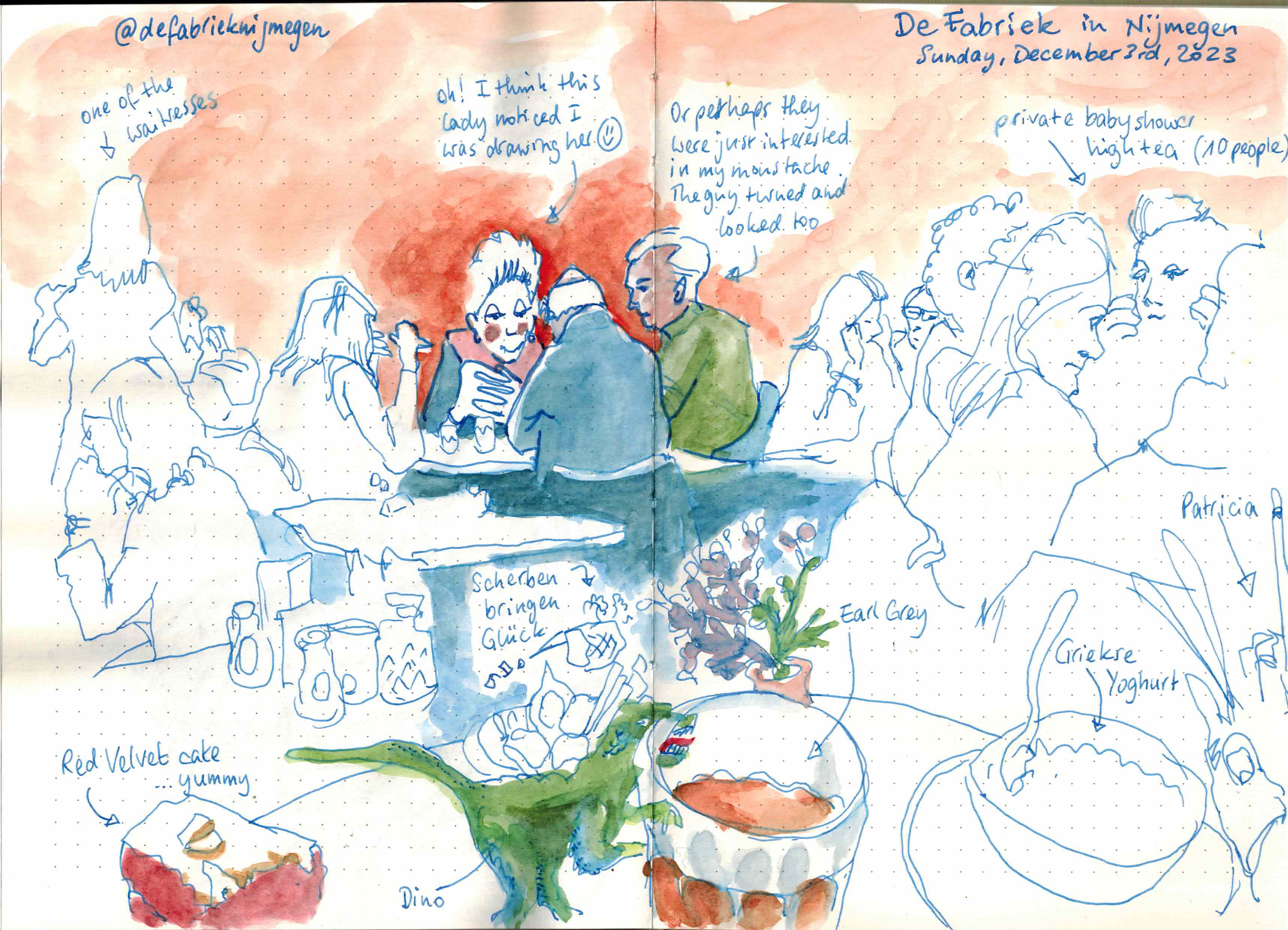
– focus on one motif, use a double spread of the A5 sketchbook
– don’t attempt to capture too much (houses can be backgrounds, use shapes and soft edges)
– sketch a thumbnail in the corner, to keep focused
– enjoy, but keep details to a minimum
– add writing with local, historical data, sometimes
Test colour combinations on pages in sketchbook, make notes on my thoughts about them. Remember I like blues and greens, use them!
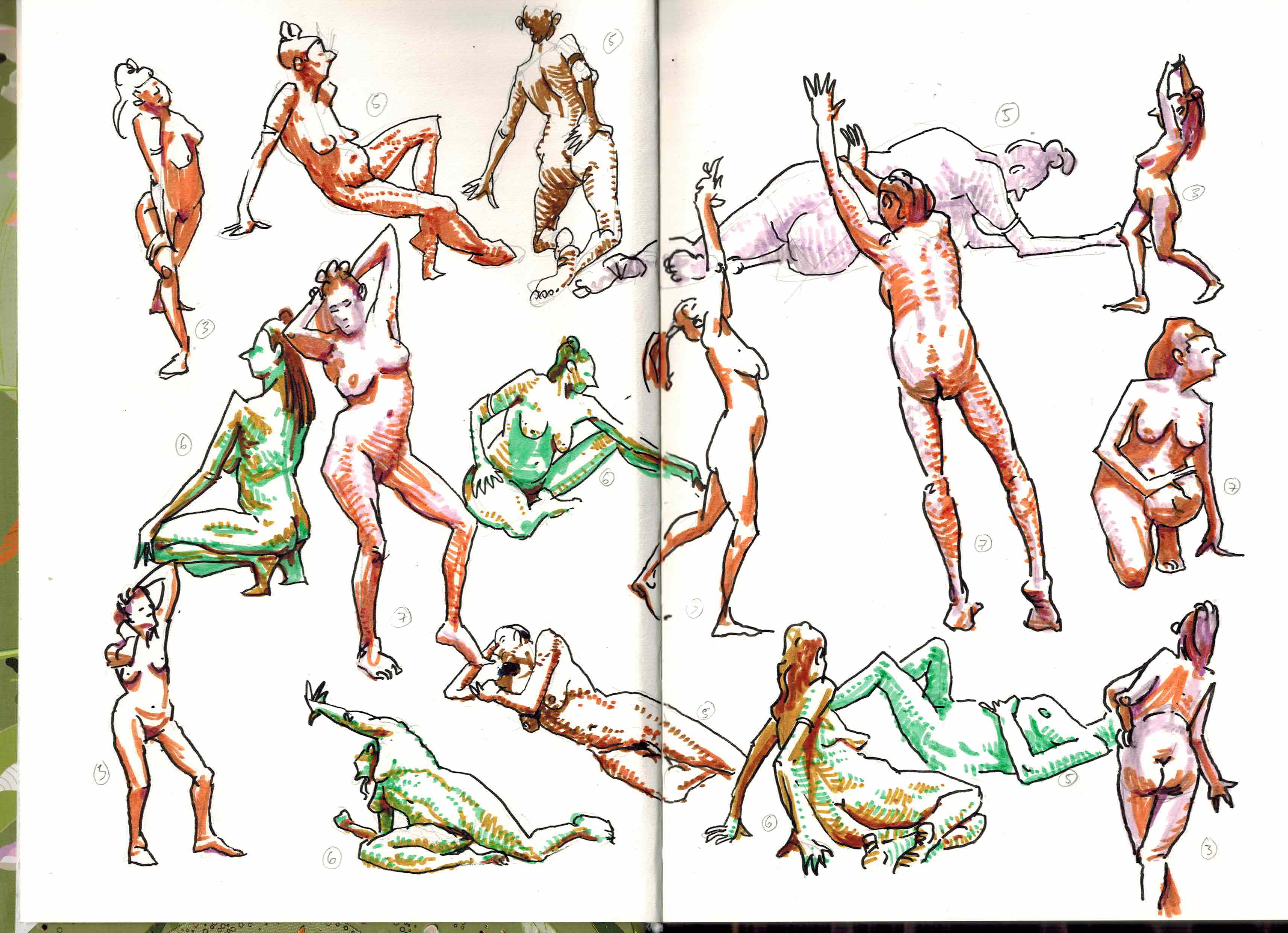
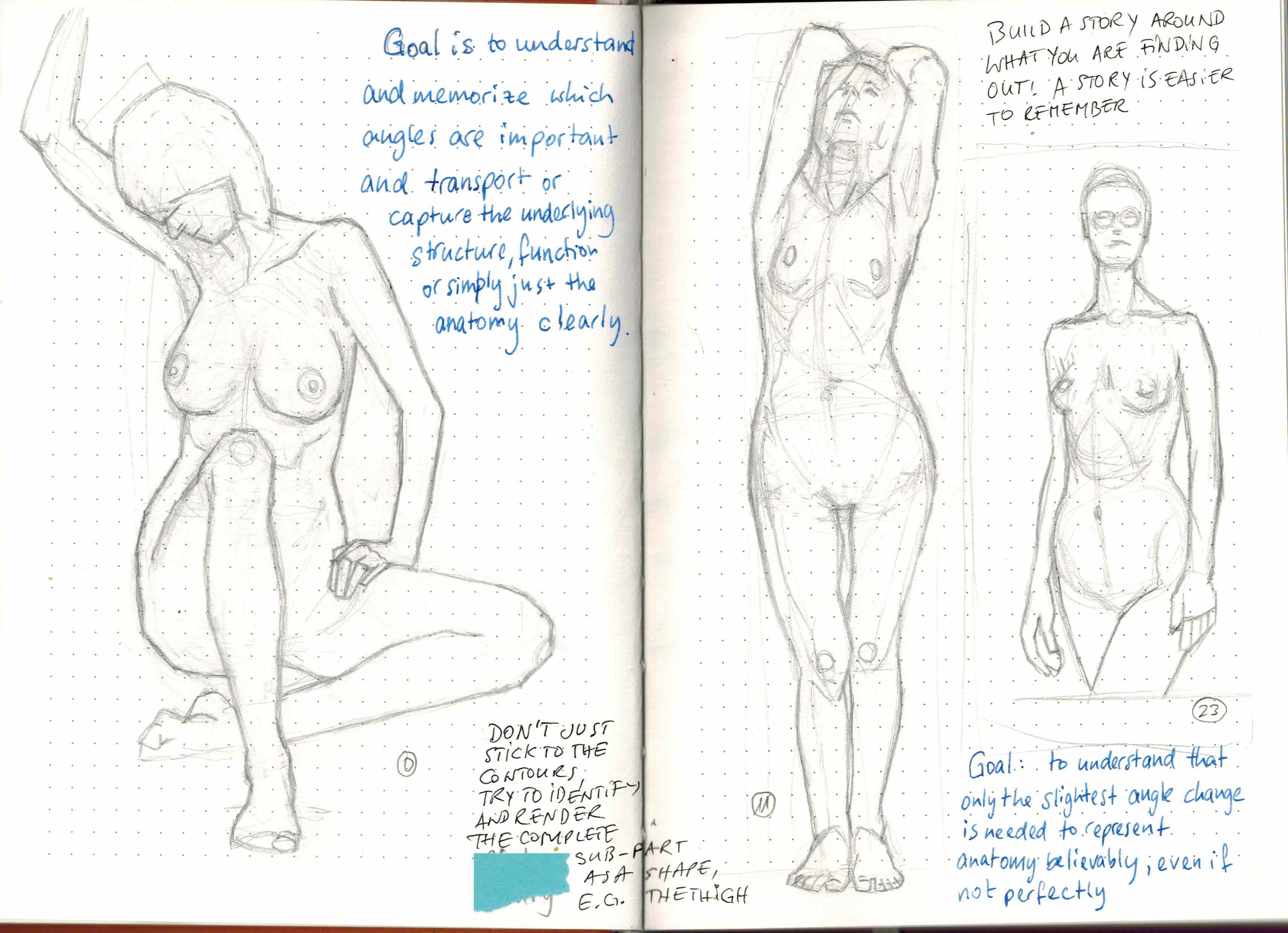
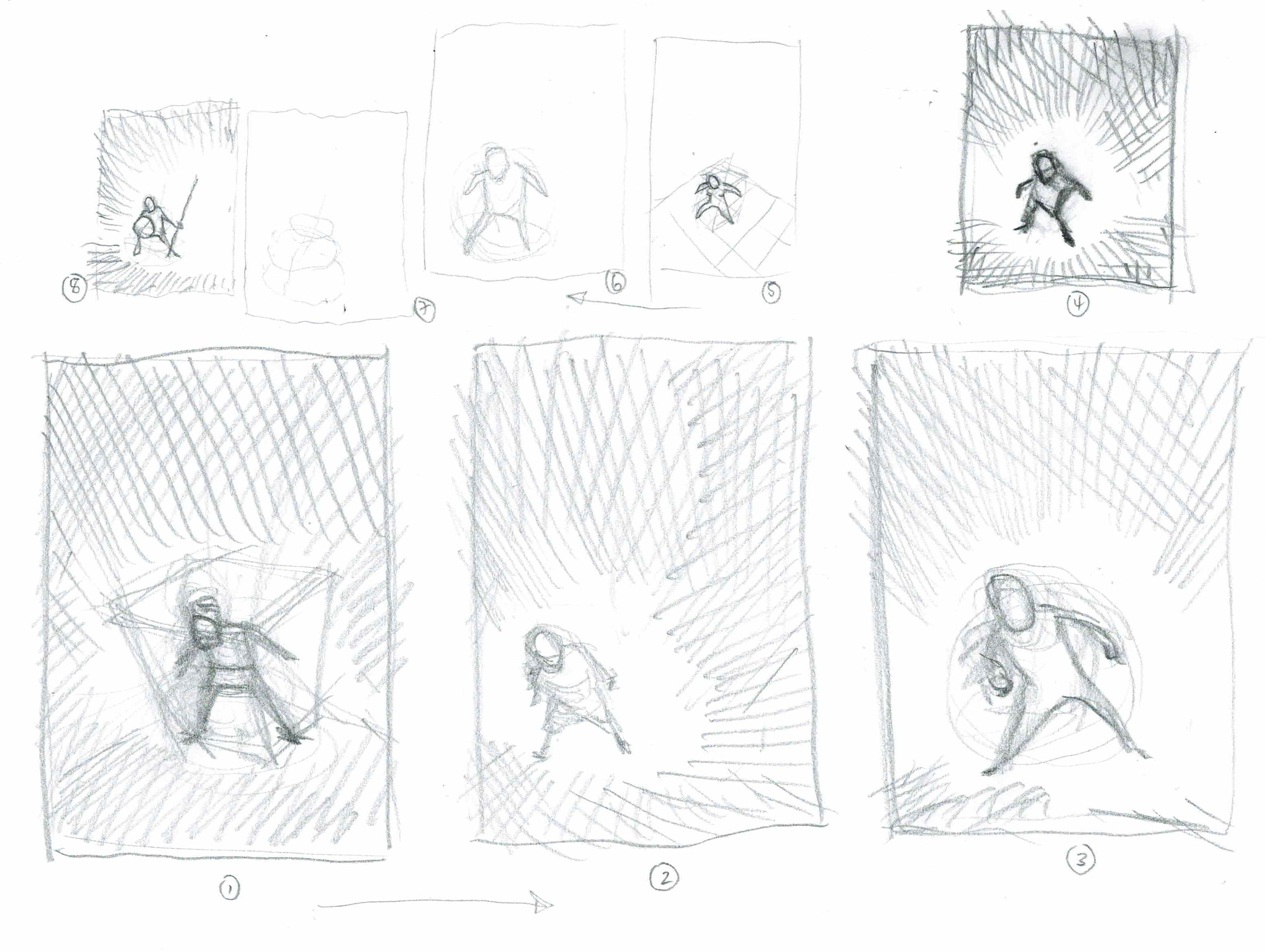
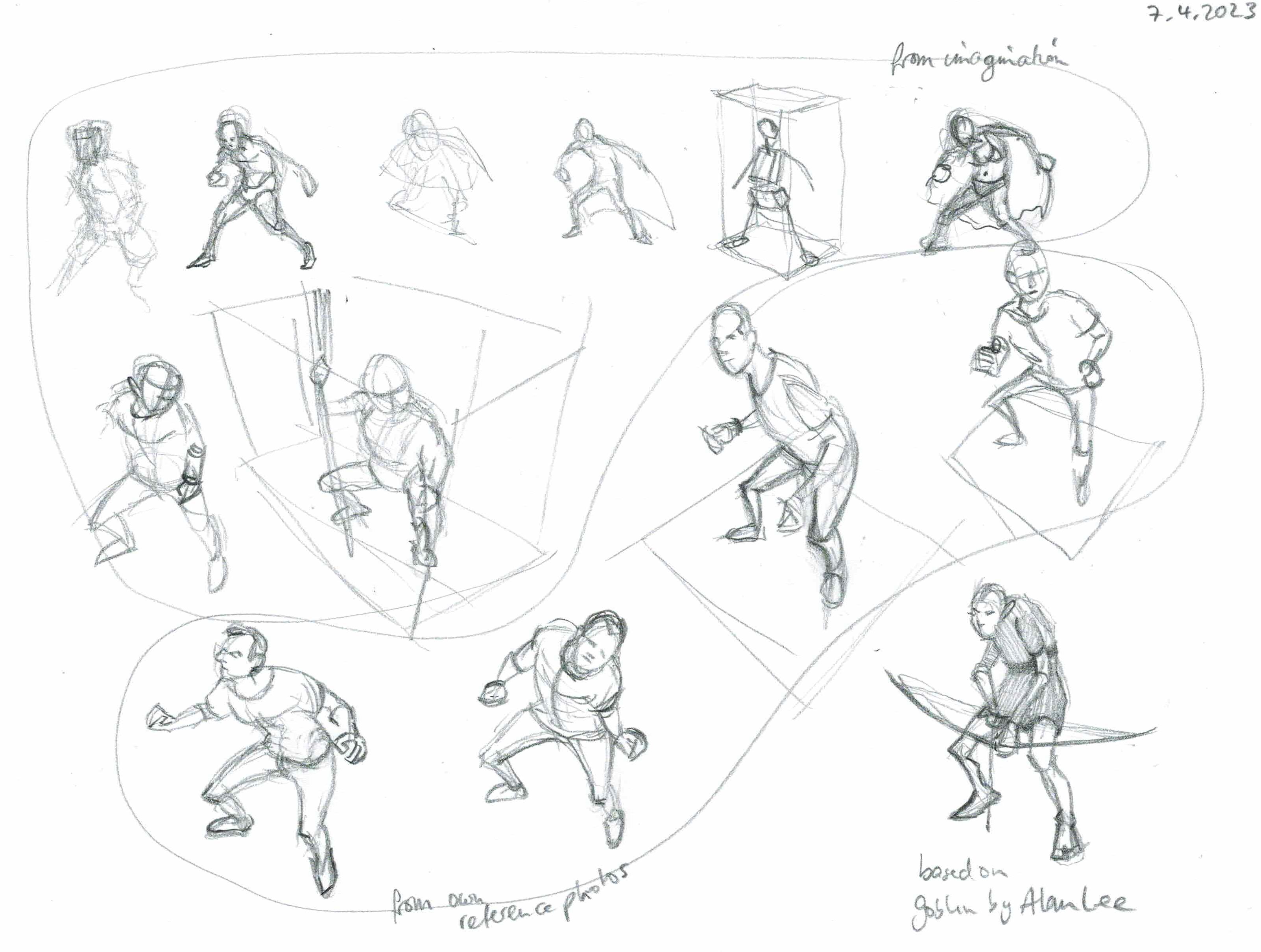
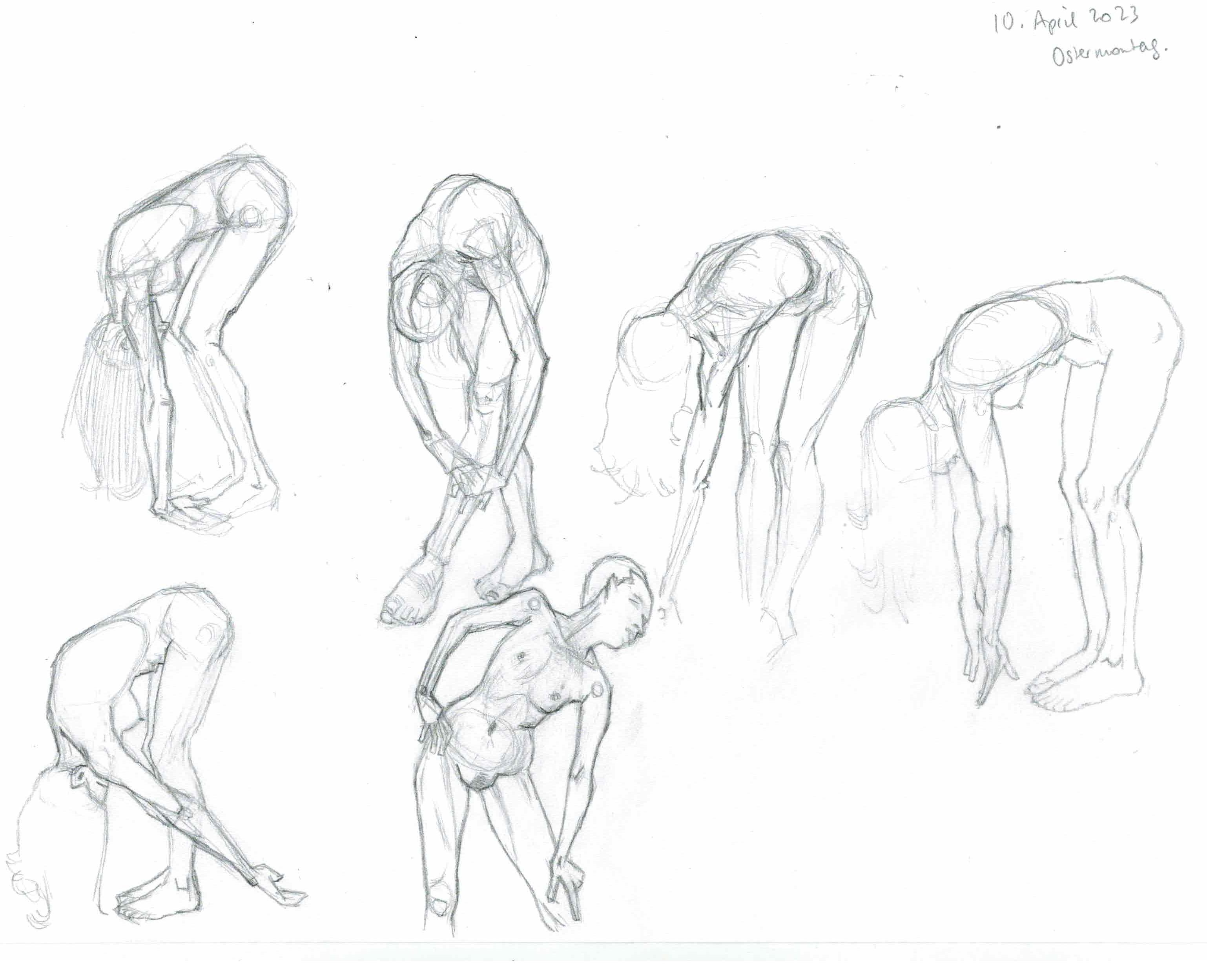
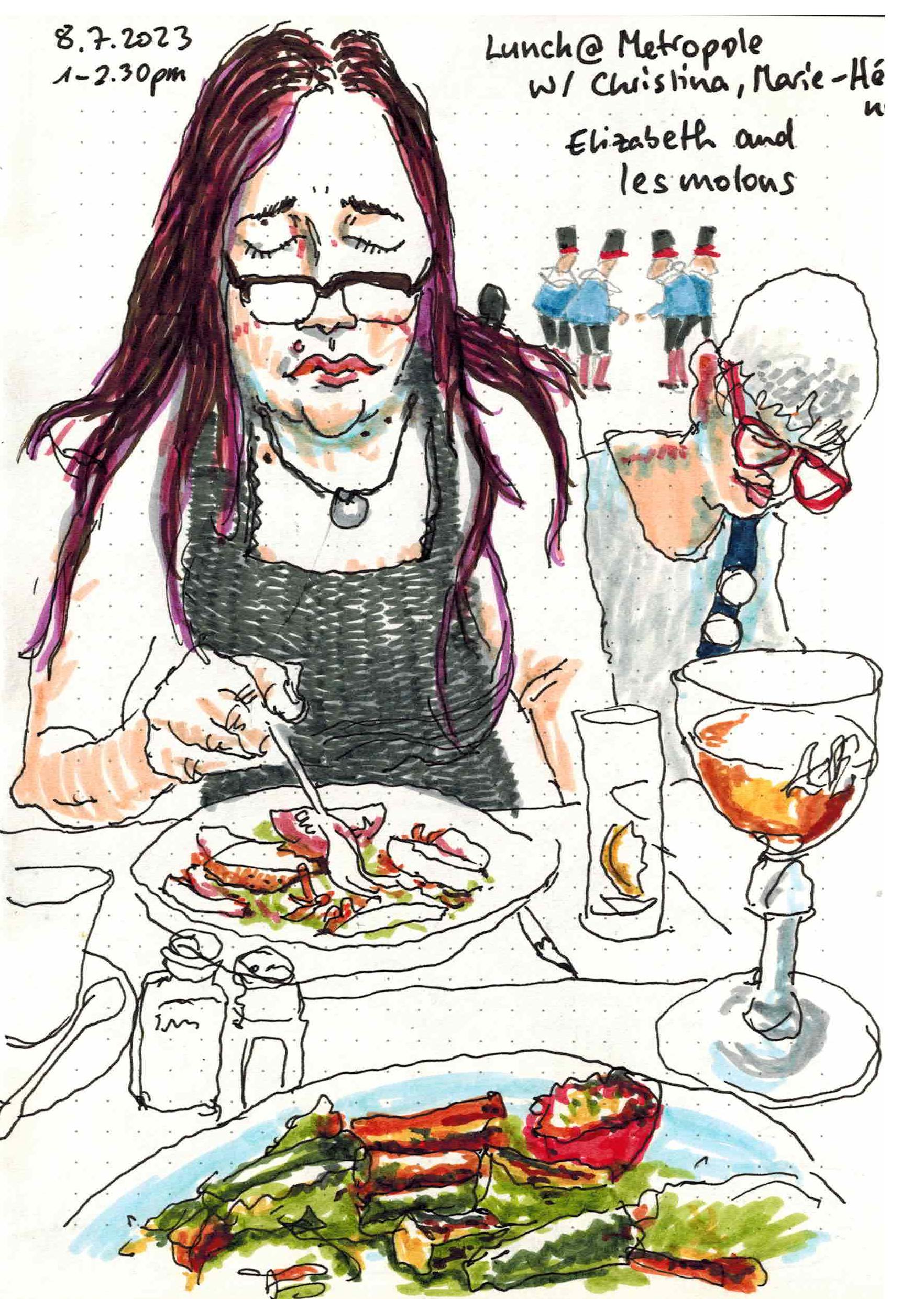
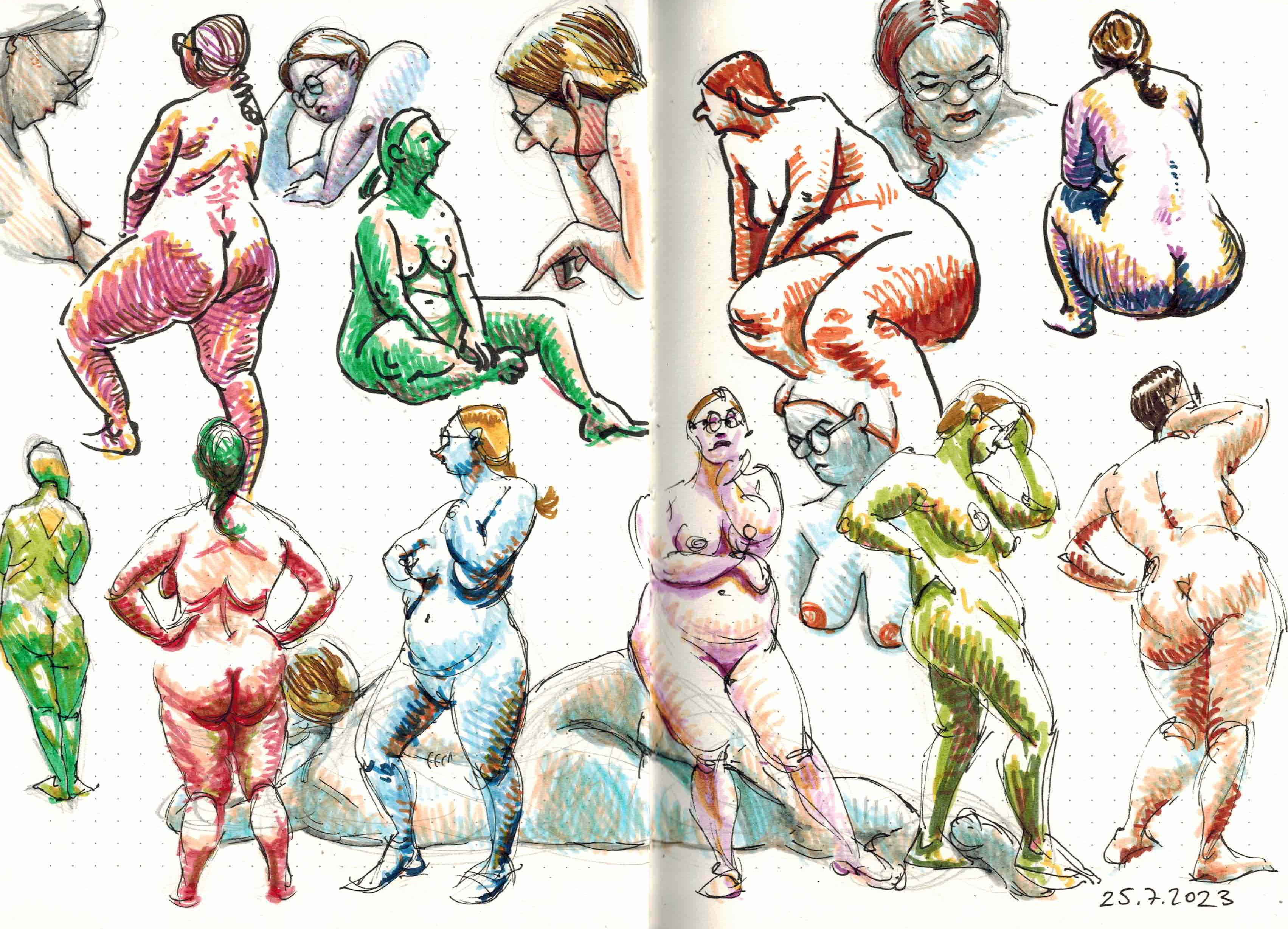
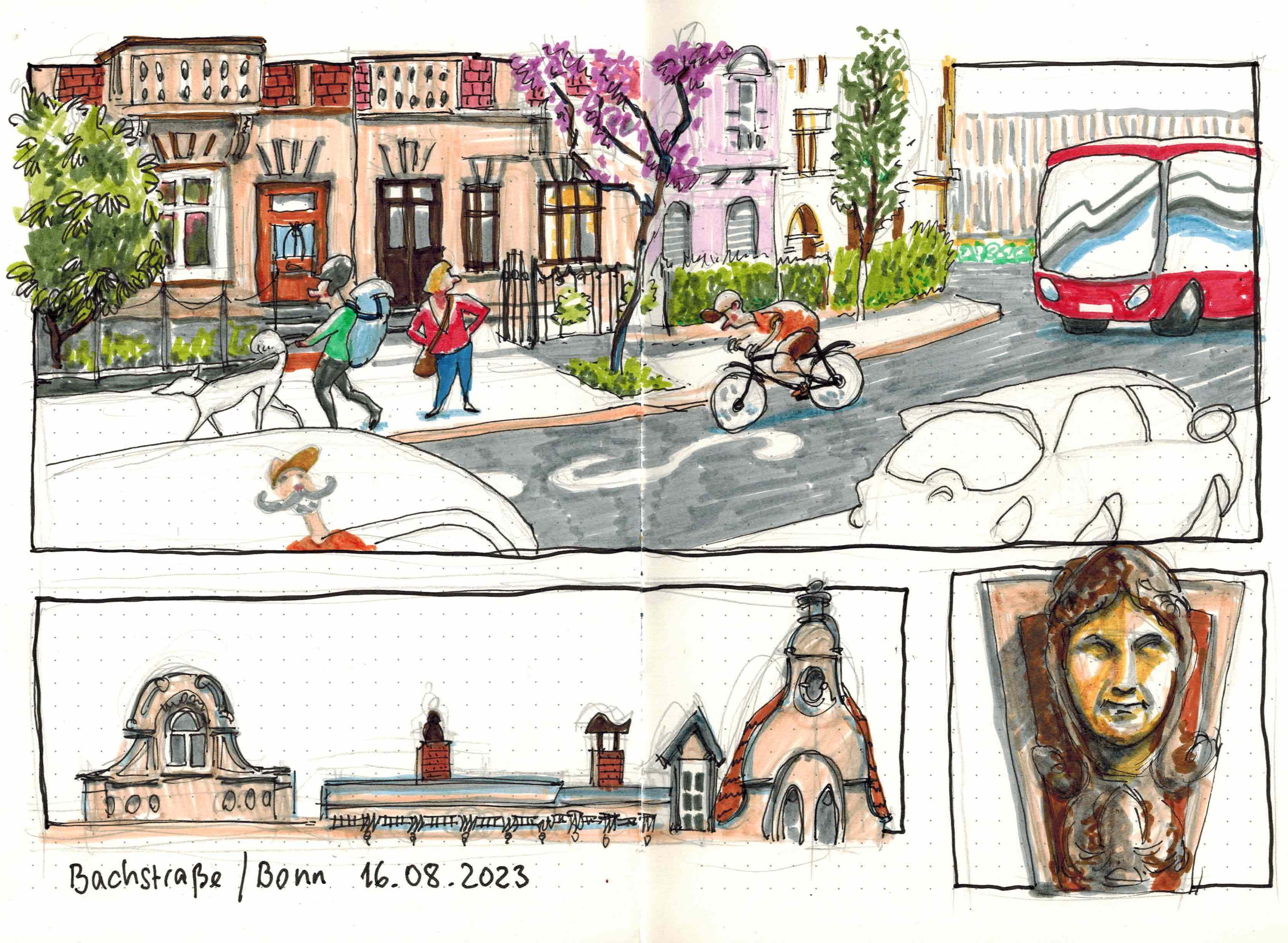
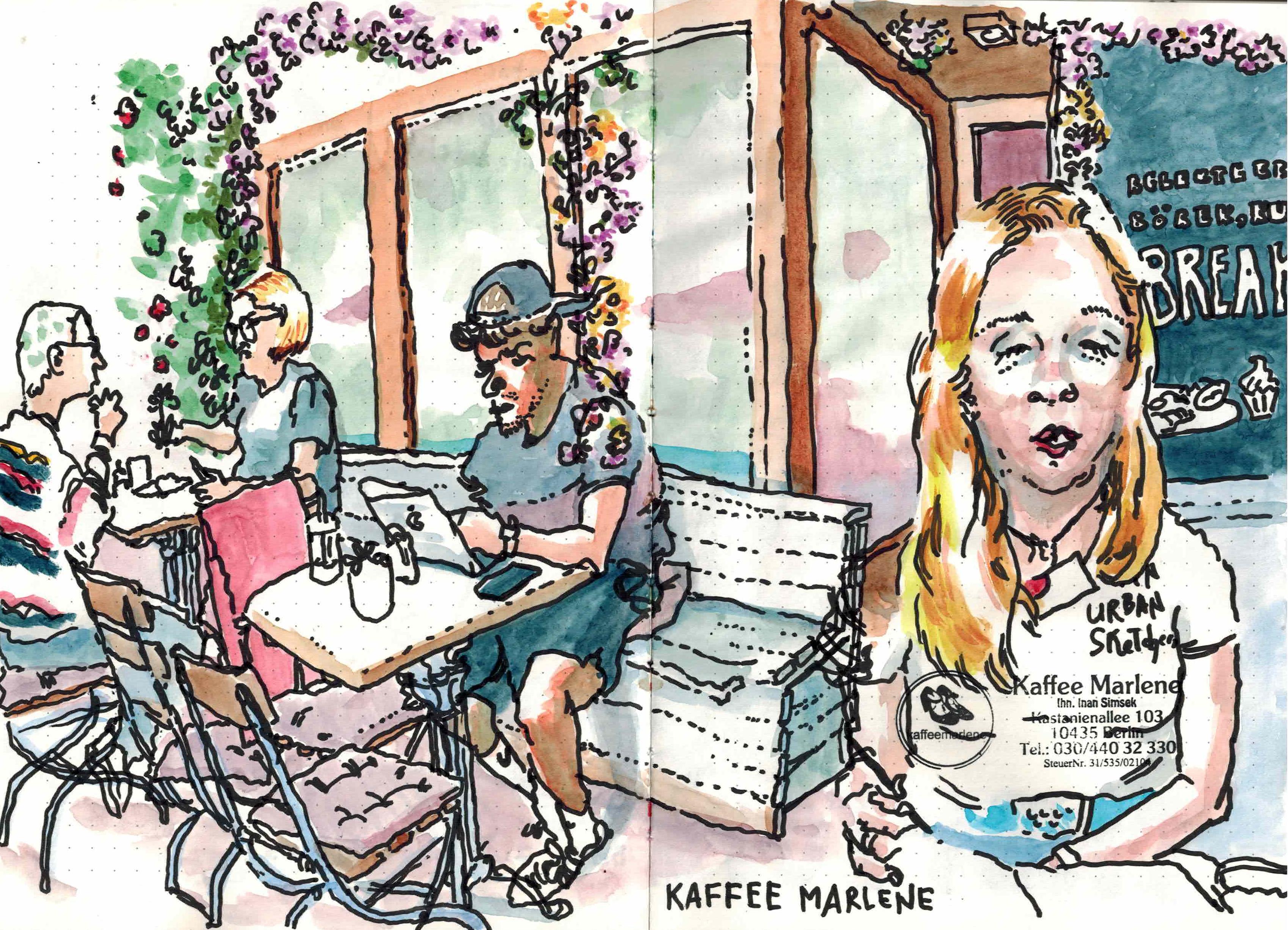
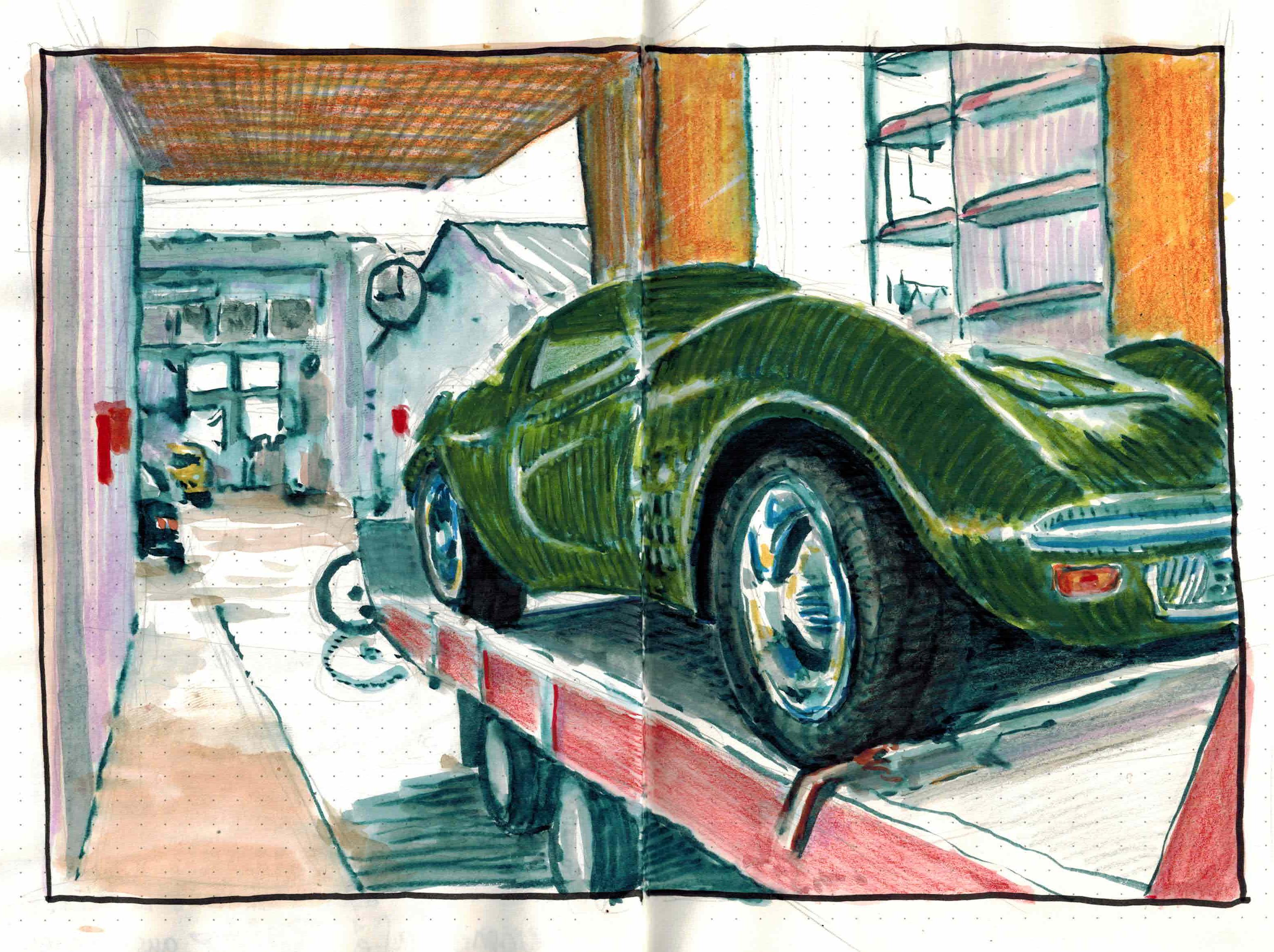
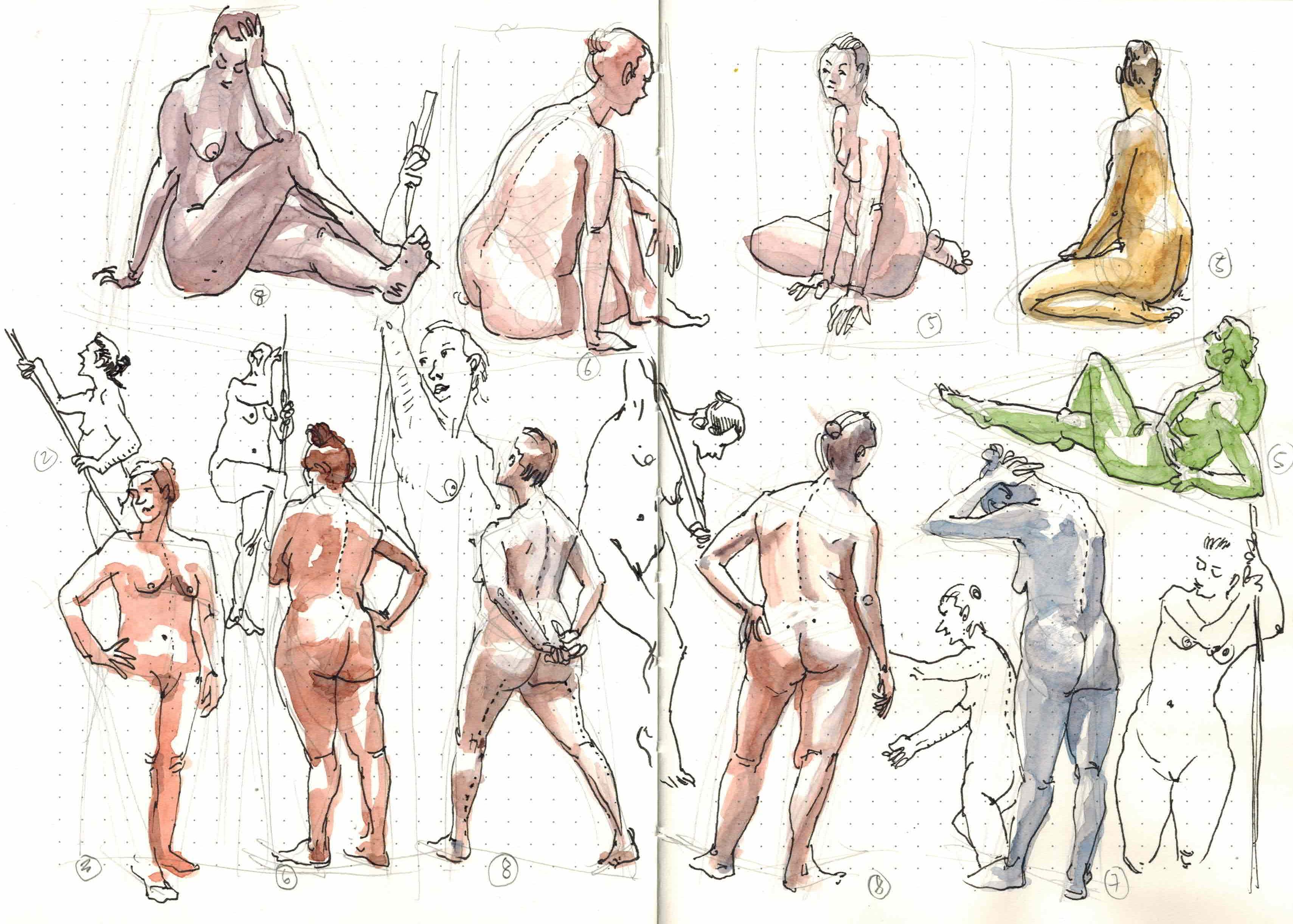
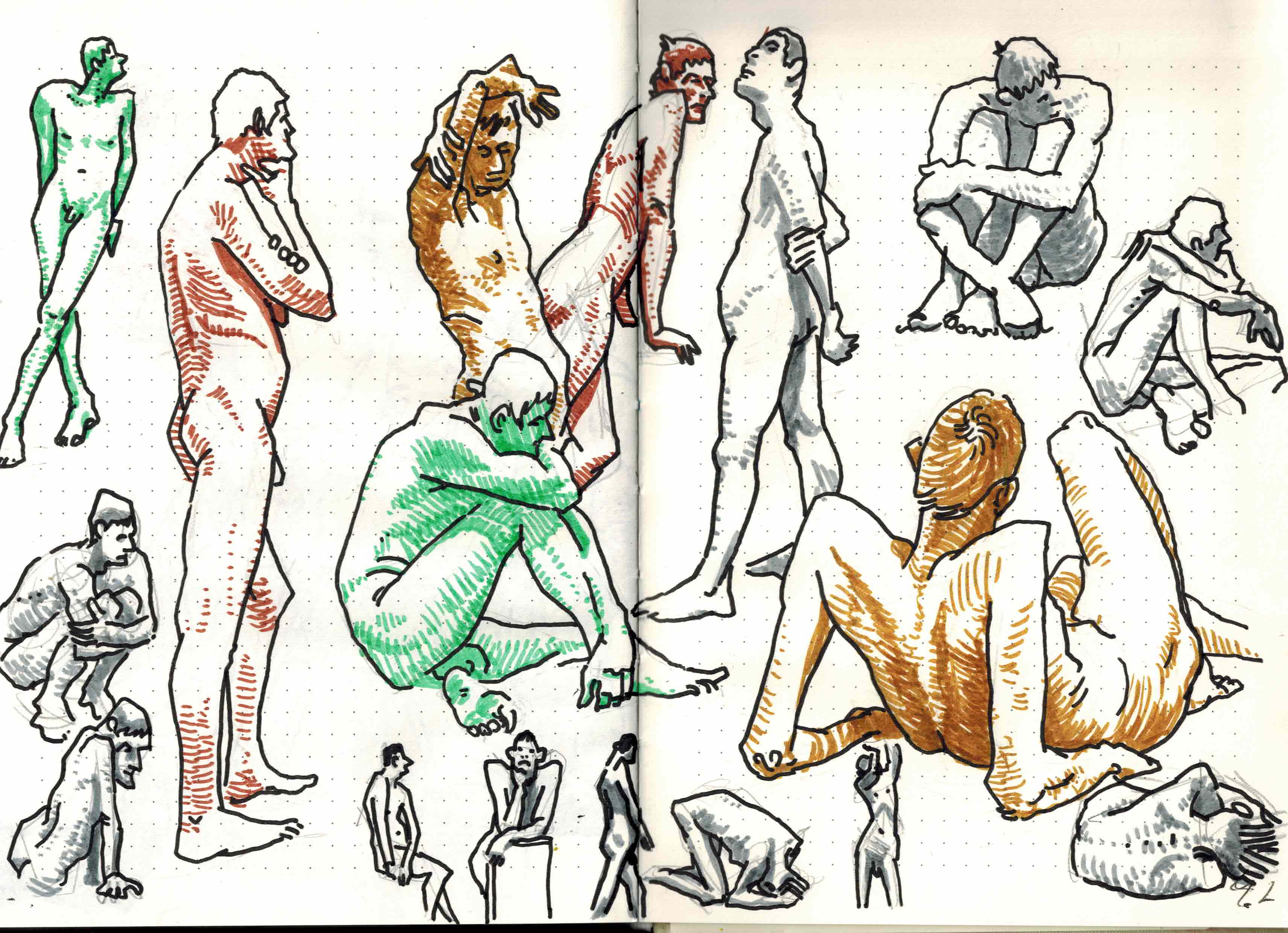
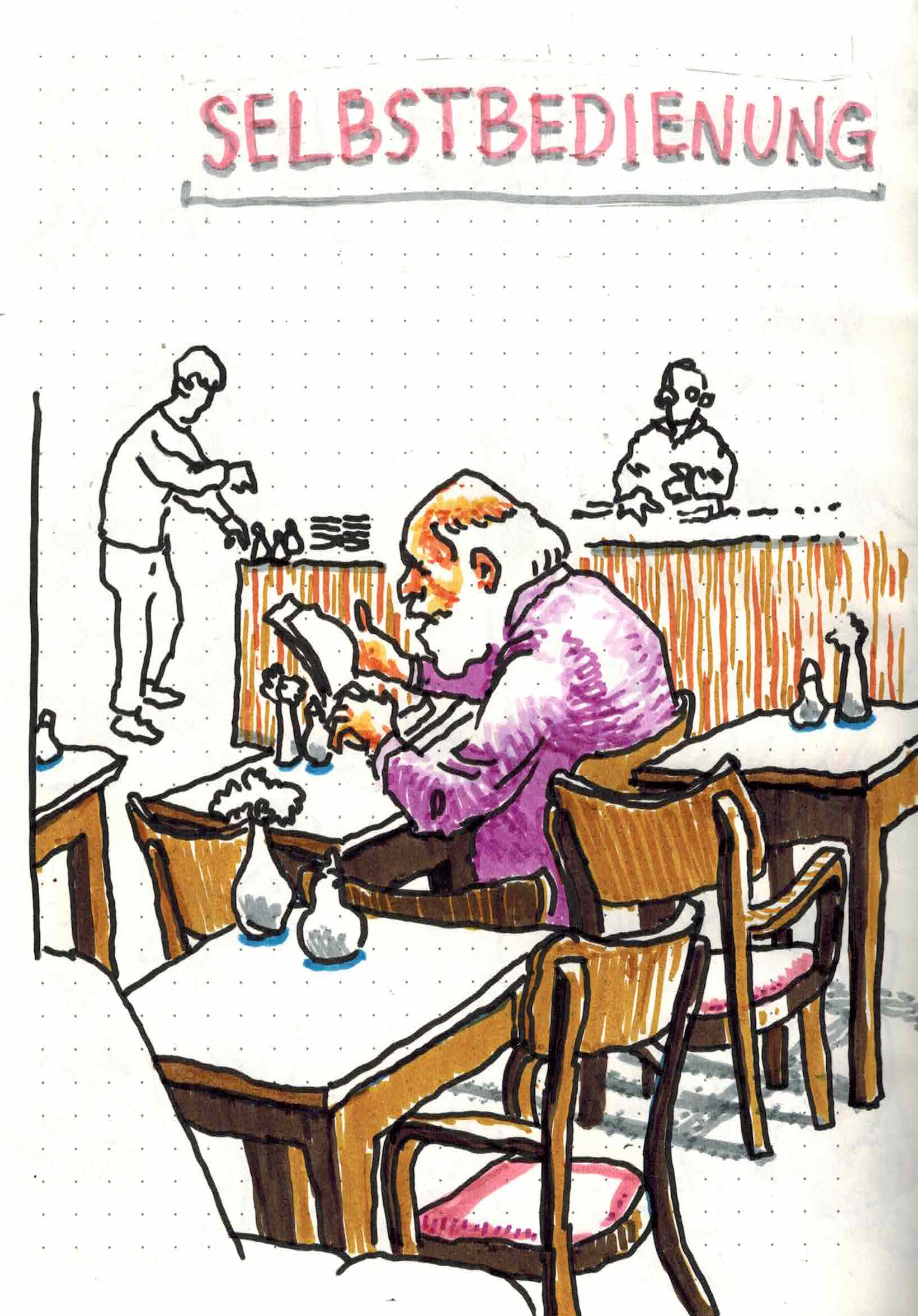
Stuart, these are some of our favourite creations of 2023, they include the capturing of depth and space, using shape to represent surface anatomy, identifying focuspoints, using contrast, using colour, telling a story, and drawing figures from the top of our head.





 Stuartdraws